
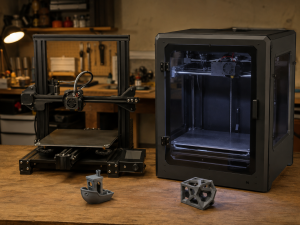
CoreXY vs bed slinger comes down to this: CoreXY is usually better for speed, enclosure-friendly printing, and long-term performance, while a bed slinger is usually better for lower cost, simpler mechanics, and beginner value. Neither one is automatically “best.” The right choice depends on what you want the printer to do. That is the real […]
Guides
3D Printing Troubleshooting Guide: Fix Every Common Print Problem
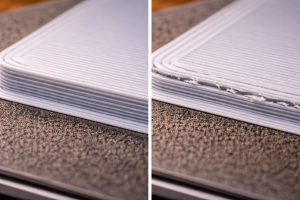
A solid 3D printing troubleshooting approach starts with this: most print failures come from a small set of root causes—first layer issues, temperature problems, moisture, or pushing your printer past its limits. If you follow the right order, you can fix almost anything quickly. 👉 The fastest rule:Check first layer → check temperature → check […]

Max Volumetric Flow Explained: How Fast Can Your 3D Printer Really Print?
Max volumetric flow is the real limit of how fast your 3D printer can print. It defines how much plastic your hotend can melt and push per second. If you exceed it, your prints will fail—no matter what speed setting you use. That’s the truth most people miss. You don’t hit a “speed limit.”You hit […]
Print Faster Without Losing Quality: Real Settings That Work
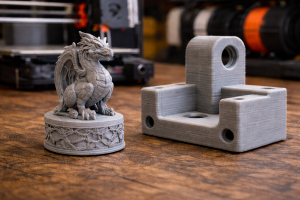
If you want to print faster without losing quality, you need to stop thinking in terms of just “speed” and start thinking in terms of flow, layer height, acceleration, and cooling working together. The biggest gains usually come from increasing layer height, optimizing acceleration, and staying within your hotend’s limits—not just cranking up print speed. […]
Best Layer Height for 3D Printing: 0.12 vs 0.2 vs 0.28 Explained
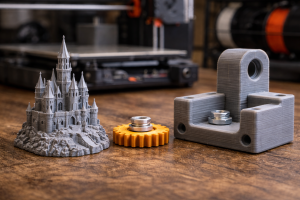
The best layer height for most 3D printing is 0.2 mm. It gives the best overall balance of print time, surface quality, and easy setup on a typical 0.4 mm nozzle. Use 0.12 mm when you want noticeably finer detail. Use 0.28 mm when you want faster prints and do not care as much about […]

Nozzle Size vs Speed: Which Nozzle Diameter Prints Faster?
Nozzle size vs speed is simple in theory: a bigger nozzle can usually print faster because it can lay down more plastic per pass. In real use, though, a bigger nozzle only helps if your hotend can melt enough filament, your layer height and line width make sense, and you are willing to trade some […]